
Physical AI Is Suddenly Everywhere — And It’s Not Waiting for Us to Catch Up
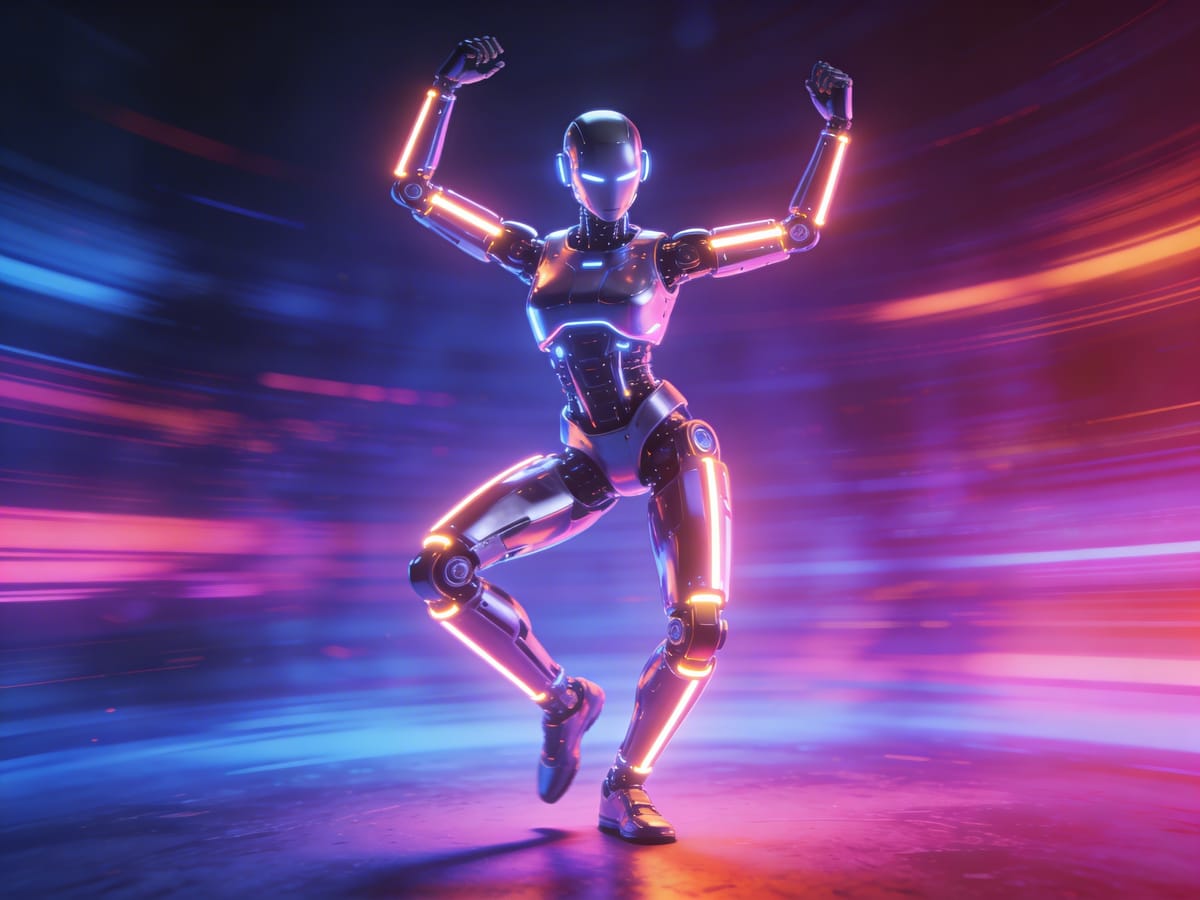

Some tech revolutions arrive quietly. Others show up doing kung fu on national TV. Physical AI — robots that can actually perceive, reason, and do stuff in the real world — is having that moment right now.
Nvidia’s Jensen Huang even called it “the ChatGPT moment for robotics,” which is tech-speak for:
Robots are about to get very real, very fast.
In the West: Companies Aren’t Building Robots — They’re Building the Robot Platform
The U.S. and Europe are treating physical AI like a giant platform land grab.
• Nvidia dropped new open models (Cosmos, GR00T) plus its Jetson T4000 chip — basically robot rocket fuel.
• Arm launched a whole new business unit just for physical AI and smart vehicles.
• Siemens + Nvidia are building an “Industrial AI Operating System,” which sounds like the thing your future robot boss will run on.
• Google pulled its robotics division, Intrinsic, into its core business — aiming to become the Android of robots: not making the robots, but powering all of them.
Enterprises are already on board. Deloitte says 58% are using physical AI today, and 80% want in soon. It’s no longer “Should we do this?”
It’s “Whose platform do we trust to not break our factory?”
Meanwhile in China: The Robots Are… Performing Kung Fu
China’s physical AI story is less “platform race,” more “look at our army of very athletic machines.”
At the Spring Festival Gala, humanoid robots did aerial flips and danced in front of hundreds of millions of viewers — a glow-up from last year’s wobbly prototypes.
Why so advanced?
Because China owns the hardware pipeline:
• 80% of the world’s humanoid robot deployments
• 50% of global industrial robots
• 70% of lidar production
• dominance in harmonic reducers (the important robot joints that keep them from walking like toddlers)
Alibaba even launched RynnBrain, an AI model for robots to understand the physical world. China now has 140+ humanoid companies and 330+ robot models. This isn’t research anymore — it’s business.
Why This Moment Actually Matters
The magic is in what’s finally changed:
You no longer need a PhD, a giant budget, and a team of exhausted engineers to deploy robots.
Platforms now promise you can automate a factory in days, not months. One company, Vention, raised $110 million claiming exactly that.
If that becomes normal, global manufacturing gets rewritten.
And Yes, There’s a Geopolitical Plotline
Whoever controls the software layer for physical AI — the models, chips, and platforms — also controls:
• supply chains
• industrial automation
• and a giant chunk of the world’s future infrastructure
That’s why the U.S. and China are racing at full speed. And why every robot announcement feels slightly like a chess move wrapped in a press release.
The Bottom Line
Physical AI isn’t a trend or a demo reel. It’s a global shift already in progress. The West is building the software brains, the East is building the hardware bodies, and together they’re reshaping how the world makes and moves everything.
Whether we’re ready or not, the robots have arrived — and they’re not stumbling anymore.
*Disclaimer: The content in this newsletter is for informational purposes only. We do not provide medical, legal, investment, or professional advice. While we do our best to ensure accuracy, some details may evolve over time or be based on third-party sources. Always do your own research and consult professionals before making decisions based on what you read here.